

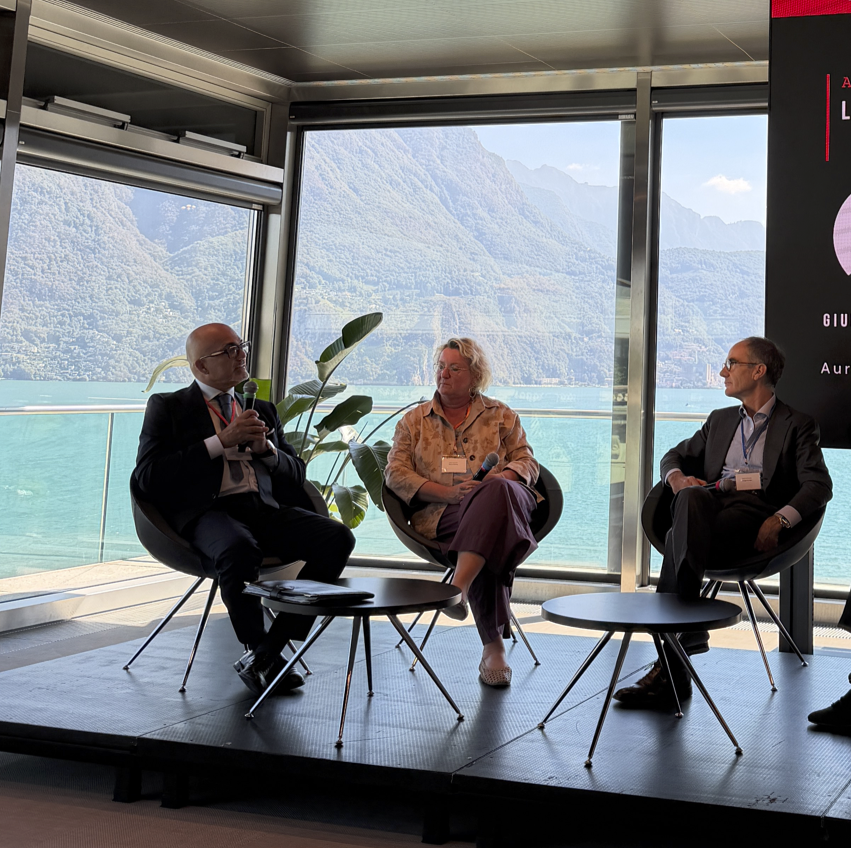
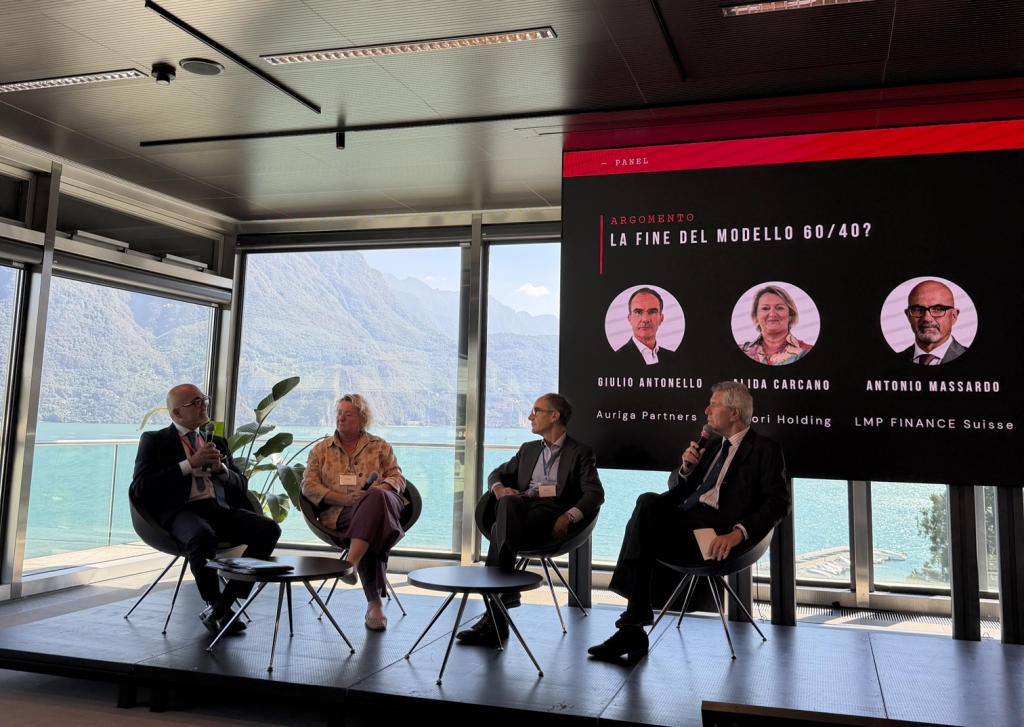
Reflections from the panel “The End of the 60/40 Model?” – EAM Day Lugano, LAC, 22 September 2026
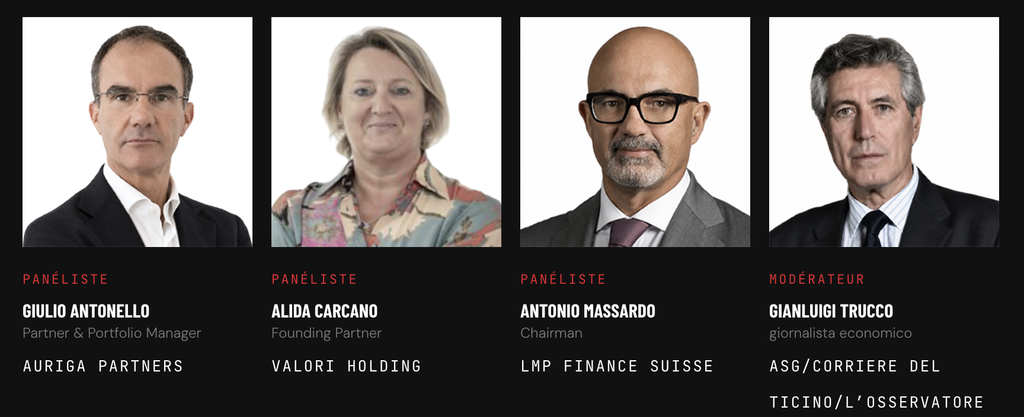
At the EAM Day in Lugano, organised by Sphere at the LAC, Antonio Massardo, Chairman of LMP Finance Suisse, spoke on the panel devoted to the future of the balanced portfolio. He was joined by Alida Carcano (Valori Holding) and Giulio Antonello (Auriga Partners), with Gianluigi Trucco moderating. The opening question was deliberately provocative. The panellists agreed in substance, though they differed in emphasis: the 60/40 model is not finished, but its two “containers” now play a different role from the one they were designed for.
The 40 delivers yield, but no longer protection
Antonio Massardo turned the discussion to markets. With the tightening cycle that began in 2022, bonds have started paying again. Today the US aggregate bond index offers around 5.3% to maturity, and the 10-year Treasury 5%, its highest level since 2007. The inflation shock, however, exposed their limit. When risk comes from inflation, equities and bonds tend to fall together, and bonds lose the defensive role they retain during economic slowdowns. In 2022 the US 60/40 lost 17.5%, its worst year since 1937. In 2026 too, with inflation rising again, US bonds are down year to date, and the balanced portfolio is gaining only thanks to its equity component.
This is no anomaly. Since 1870, the correlation between equities and bonds has been positive in almost four years out of five. The twenty years in which bonds systematically provided protection were the exception, not the rule. The 40 has therefore become a source of return rather than guaranteed protection, and protection has to be sought within the equity allocation as well. For Swiss franc investors the picture is even starker. The 10-year Swiss Confederation bond yields around 0.55%, less than Swiss inflation: in francs, the 40 does not even keep pace with the cost of living.
This is where concentration comes in. Investors who passively track the S&P 500 now hold almost 40% of their investment in ten companies, and around 35% in the Magnificent Seven alone. In Switzerland the phenomenon is even more pronounced: in the SMI, the top three stocks account for more than 40% of the index. In Massardo’s view, indices this concentrated no longer offer the diversification they promise. That opens room for active management based on direct securities and a systematic approach. It is a thesis that must be proven through results, because the statistics are unforgiving: according to SPIVA, 98% of global equity funds in euros underperformed their index over ten years. What makes the difference, then, is not the “active” label but the method. And here an independent manager has an edge: large institutions are often held back by compliance, benchmark and reputational constraints that do not apply to him.
Finally, Massardo pointed to a medium-term factor: cash waiting on the sidelines. Since Covid, amid the pandemic, wars and interest rates that once again reward holding cash, many investors have stayed on the sidelines. US money market funds now hold around $7.9 trillion, close to their all-time high. They yield just under 4%. With the Fed having just raised rates and projecting one more hike before year-end, that money is in no hurry to move. Experience shows the return to markets will not be immediate: even after the Fed’s rate cut in September 2024, money market assets kept growing. But once the yield gap genuinely narrows, that cash will have to go back in search of return. A significant share will flow into real assets, starting with equities. It is an enormous pool of potential demand that markets are not yet pricing in.
The generational challenge
It was Antonio Massardo who framed the issue, with one of the most quoted lines of the panel. Today clients get their information through tools such as ChatGPT, which “sell knowledge without experience.” The distinction goes to the heart of the profession. Information is available everywhere, but the experience of managing wealth through market cycles cannot be downloaded from an app. Alida Carcano took the argument to the generational level. As life expectancy lengthens, managers now look after three or four generations of the same family at once. The youngest are shaped by social media and AI platforms and have never lived through a real market crisis. The shared conclusion was that financial education becomes an integral part of the mandate. The manager’s value lies in turning information into judgement, so that a portfolio does not become, in Carcano’s words, “a jumble of securities.”
On ESG and costs, the panel noted a certain fatigue with the sustainability narrative after the years of greenwashing. The panellists nonetheless expressed conviction that the theme will return to centre stage. As for costs, Massardo said active management is more expensive and must justify that through results, which is what clients judge it on.
LMP’s view
For LMP Finance Suisse, the panel confirms a principle that guides our management. Effective diversification does not come from asset-class labels. It comes from choosing genuinely uncorrelated sources of risk and selecting securities directly. The 60/40 remains a useful reference point. It must, however, be reinterpreted for a world in which bonds provide yield but not protection, and indices are no longer as diversified as they appear.